
Solar panels: what homebuyers need to know
The introduction of the Feed in Tariff (FIT) scheme in 2010 saw a boom in domestic solar panel installation. Even after the wind-down of the FIT scheme in 2019 (when it was replaced with the Smart Export Guarantee (SEG) scheme), many homeowners continue to install PV systems in the hope of reducing their energy bills and ‘going green’.
It’s no surprise, then, that having solar panels on can be a major asset for properties on the market. However, solar panels can throw a spanner in the works at various points during conveyancing, some of which have ramifications well beyond Completion. The following account outlines key points to consider when buying a property with solar panels, and one homebuyer’s experience of officially gaining ownership of the panels themselves…more than fourteen months after Completion!
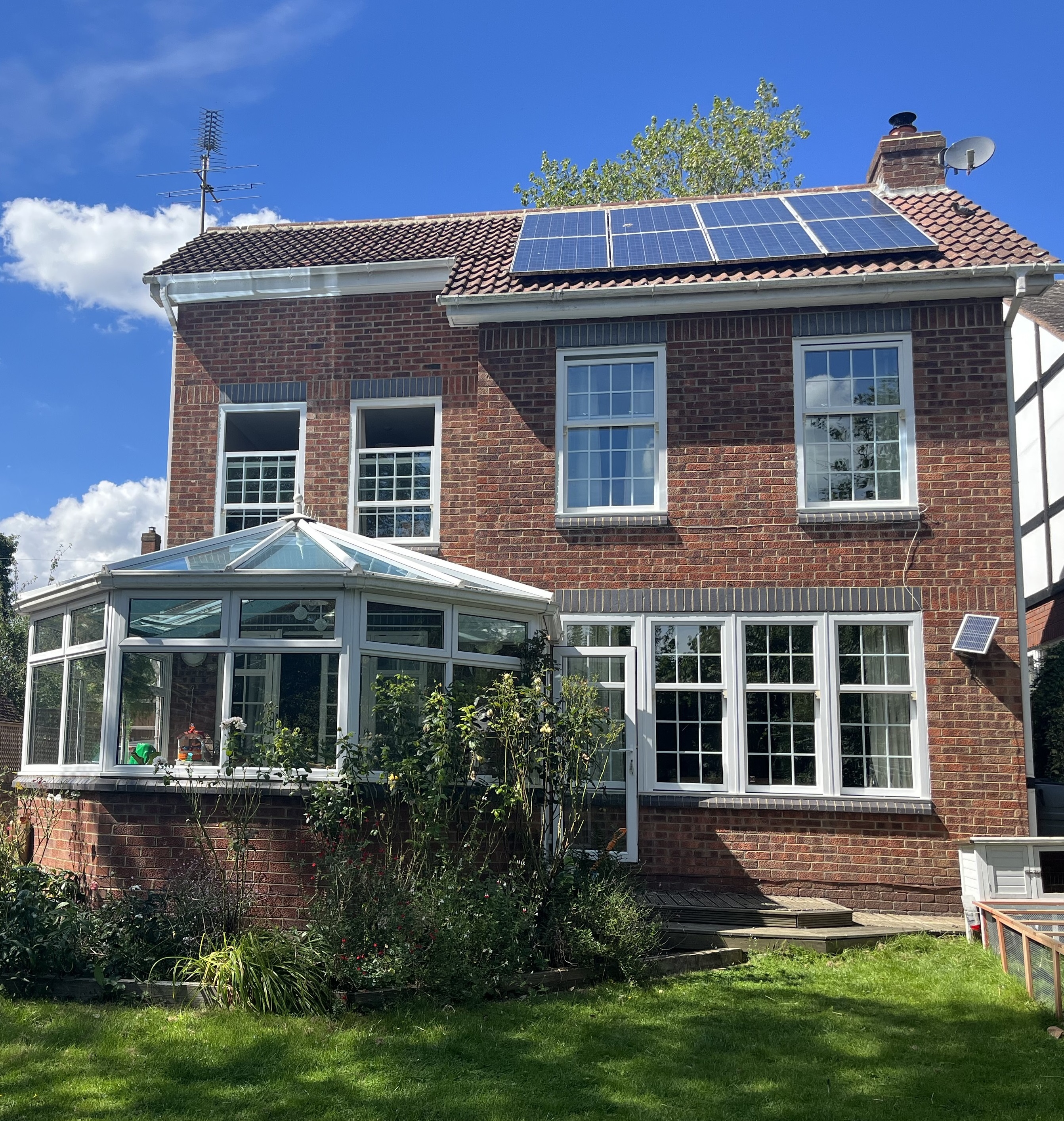
Can you own the property but not the panels?
Rather than buy solar panels outright, many homeowners chose to lease their roof to an energy company who then install panels on it. In this case, the homeowner doesn’t own the panels, but they are the registered leaseholder. In other cases, the panels are owned outright; this can make a property house that much more appealing as a purchase.
Key questions to ask the seller
There are important points to consider if you are considering offering on a house with solar panels. Much of this information will be supplied by the seller as a matter of course further down the line in conveyancing; however, forewarned is forearmed, and the earlier you have this information the better informed your decision will be.
1. How long is left on the FIT?
The typical FIT lasts for 20 years. Even if the panels were installed and the FIT started just before the wind-down of FIT in April 2019, you could still expect to benefit from the FIT until 2039.
When we offered on out house, there were 11 years remaining on the 20-year tariff. This was long enough to assure us we’d benefit from the scheme for some time before we would need to move to the Smart Export Guarantee (SEG) scheme.
2. How old are the panels?
Over time, solar panels will become less efficient at generating electricity. It is thought that most only begin degrading significantly after 25 years, and most installations are under warranty for this period. Even after 25 years, many installers and energy companies argue that well-maintained panels are fit for purpose for up to 30 or 40 years. It is important to understand the age of the installation, any warranty covering it and its parts, and when you might need to replace them. Do you see yourself still living in the property at that time? How much would it cost, roughly?
You may also want to consider whether the panels are netted (to prevent birds roosting under them). In our care, there was no netting but plentiful evidence of pigeon activity nearby. Shortly after moving in we paid £500 to have netting installed: a drop in the ocean of a property transaction, but an expense to factor in nonetheless.
3. Are the panels owned outright? Or is the roof space leased?
Leased panels can cause some complications during conveyancing, as the mortgage lender will need to approve the lease and the installation. Some lenders might not offer a mortgage on a property where the roof space is leased if the lease doesn’t meet their requirements. Some lease contracts may include a buy-out clause; a seller keen to secure a buyer might consider this, or it could be an option for the buyer (after Completion).
It is a good idea to ask for a copy of the lease and have your conveyancing solicitor (and your mortgage lender) approve this early on in proceedings. The seller must also be registered on the OFGEM Central FIT Register. In due course, the energy company will need to confirm their intention to transfer the lease over to the new owners in due course.
4. Can the seller provide the MCS (Microgeneration Certification Scheme) installer certificate, and an MCS certificate for the installation?
This will be essential in the conveyancing process.
5. What is the Energy Efficiency rating of the panels?
Some mortgage lenders require a minimum rating of D or above, so it is worthwhile checking this early on in proceedings.
6. Have any repairs to the system been carried out?
If so, can the seller provide details of the repair works and any replaced parts? For example, inverters typically have a lifespan of 10 years or so; installations older than this are likely to require a new inverter before too long. The installation certificates and warranty documents for any replaced parts should be provided during conveyancing.
7. Are there any large trees that might shade the solar panels? Who owns the trees? Are they subject to a Tree Protection Order (TPO)?
Any trees blocking the panels will undoubtedly limit electricity generation, so keeping growth in check is key. Furthermore, if a tree is subject to a TPO, any work that will impact growth and health (such as topping or lopping) can’t be undertaken without permission from the Local Authority. Even the cost of periodic topping or lopping on non-TPO-protected trees should be factored into your decision to purchase. What is more, if the trees are owned by a neighbour or Local Authority, they aren’t likely to have any responsibility to cut their tree(s) to prevent shading the solar panels; seek your conveyancing solicitor’s advice for clarity on the rights and responsibilities here.
What is required to transfer ownership of the panels?
Even if all questions are answered to your satisfaction, and your mortgage lender and solicitor alike are on board, you may not be out of the woods yet. In our case, whilst the conveyancing process was perfectly smooth (as the panels were owned outright), a small oversight delayed us officially owning our solar panels for over a year after Completion.
In our experience, the following were required to transfer ownership of the panels successfully:
- The sellers had to complete a form issued by the energy company, stating they were transferring ownership to us. This included details of the Completion date, final meter reading etc.
- We, the buyers, had to complete a similar form asking that ownership is transferred to us. This included details of the first meter reading, payment details, and required proof of ID and proof of ownership.
A note of caution
Firstly, we had an unfortunate delay of three months whilst we waited for the energy company to respond to our initial application for transfer of ownership. After submitting the form, we received an automated reply to assure us it had been received but it would take the company three months to look at it (and politely asking us not to contact them before that time had elapsed). It transpired that the email address for submission (which was printed on the form itself!) was incorrect. Despite receiving an automatic email acknowledgement of receipt, our first application was never actually received, and it took three months for this error to come to light.
Unfortunately, once they did receive the form (to the correct email address) we were informed - a further three months later - that we couldn’t prove that we owned the panels specifically. True, we had a letter from our solicitor confirming Completion had taken place and that we owned the property. This, however, was insufficient for the energy company; instead, they needed something that specifically stated that the panels were included in the property purchase.
We had failed to ensure the solar panels were included on the fixtures and fittings list – the TA10 form (TA10 Fittings and contents form (3rd edition) (2013)). The panels were mentioned on the TA6 form (TA6 Property information form (5th edition) (2024)), but this wasn’t sufficient for the energy company.
In desperation, we tried providing paperwork showing both the buyers and sellers’ solicitors exchanging extensive questions and answers on the solar panels throughout the sale/purchase. Again, this wasn’t sufficient, and it seemed we couldn’t provide anything to say that we actually owned the panels as part of our ownership of the house. Each attempt to prove our ownership incurred additional three-month delays.
Any guess at the amount of time spent on the phone to the energy company’s FIT team I think would be an underestimation. We must have spent hours both being on hold, and then speaking to an advisor when trying to chase our applications and then trying to understand the rationale behind certain documents being rejected as proof of ownership.
In the end, we asked the previous owners for a letter to confirm that the panels were indeed included in the property sale, and this was accepted! We were very lucky to have such obliging sellers who provided this within a day or two of our request. At the time, we were amazed that the Energy Company accepted this rather than simply take our ownership as fact given the sellers had also submitted paperwork to say we were to take over ownership!
Looking back on our conveyancing journey, we made too many assumptions that cost us in time and money after Completion. After receiving satisfactory responses to their enquiries about the solar panels, our solicitor advised us to find out what the energy company required to transfer ownership. Foolishly, we had skimmed over the ownership transfer form and took from it that we needed proof of ownership of the panels. We assumed the panels would be included in the contract (we knew they were included on at least one form already- the TA6 form) so we didn’t insist they were included on the TA10 form too, as a fixture included in the sale. If we had insisted on a greater degree of accuracy on all forms, we would have been spared the worst of a protracted process of transferring ownership of the panels.
Summary
Solar panels can be a significant asset to a property on the market. There are a number of key questions to ask the seller, or their Estate Agent, at the outset. For example, consider the terms and conditions of any lease (if applicable), how long is left of the FIT, the age of the system and whether there have been any repairs or replaced parts. Further down the line, care should be taken during the conveyancing process, to ensure the contract of sale/purchase meets the criteria required by the relevant energy company’s FIT team (or SEG team). Even with all the correct documentation in place, be prepared for some delay when it comes to officially obtaining ownership of the panels and reaping the financial rewards.