
Riding the EV Range
Despite reading that EV (Electric Vehicle) sales have dropped in market percentage terms, there seems to be a noticeable increase in the number of EVs in every traffic queue, most of them instantly recognisable by the green flash down the left hand side of their number plates. It seems that whether you are sitting in your local with a glass of your favourite or standing at the office coffee station they are the hot topic of conversation, in the same way that mobile phones were in their early days.
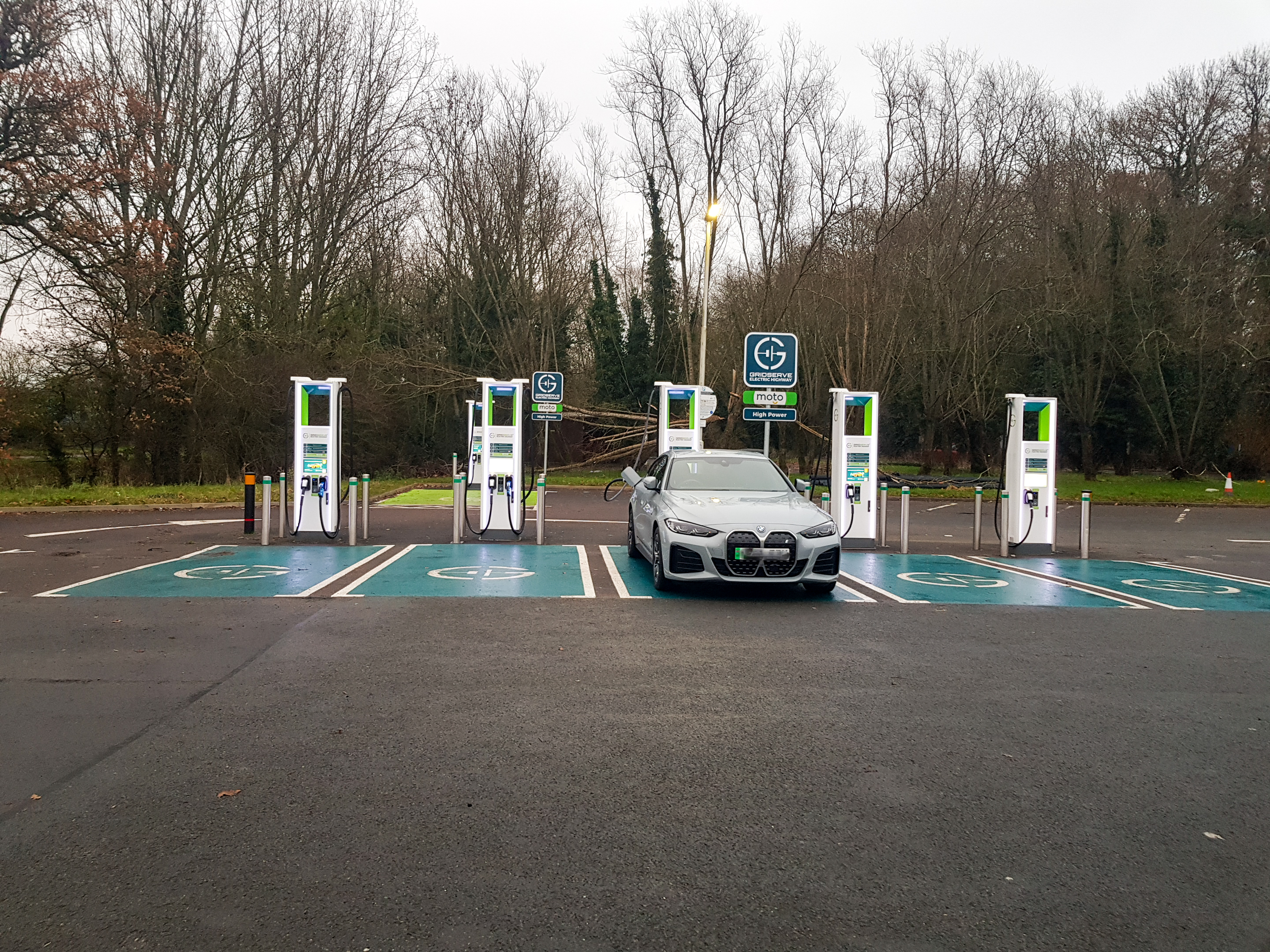
The main conversations seem to centre on common issues such as, they are quiet and smooth, and they are remarkably quick off the mark. The talk seems to inevitably get round to how far they travel on a full charge. There is no stock answer to that question, it firstly depends on the size of battery in the car and how much energy it stores. Secondly, the way the vehicle is driven and the equipment used during the journey and last but not least, the weather has an effect on the battery performance.
On that basis there are similarities between an EV and a petrol or diesel powered car, some of which had larger capacity fuel tanks than others, giving a longer distance without the need to refuel. Similarly with an EV, the bigger the battery the more capacity it has to store power to drive the electric motor and therefore the longer the range of the vehicle on a full charge. Also worth bearing in mind is that an EV is heavier than its fossil fuelled counterpart due to the weight of the battery. An internal combustion engine Peugeot 208 for instance tips the scales at around 1,100 kg whereas it’s electrically powered cousin weighs in at roughly 1,900 kg
The speed at which fossil fuelled cars were driven also had a significant effect on the miles per gallon achieved and a heavy right foot will have a similar effect on an EV. It takes more power to drive a heavy electric powered vehicle down a motorway at 70 miles per hour than is required to make the same journey at a more restrained 40 miles per hour.
Almost all of the equipment and accessories available to the driver of a modern car require a certain amount of electricity to function. Equipment such as head lights, windscreen wipers and air conditioning or heaters require more power than a digital readout clock or speedometer. Using these in a petrol or diesel engined vehicle makes little or no difference to fuel consumption but with an EV there is only one source of power and that is the electricity stored in the vehicle’s battery and used to drive it. This means that driving an EV at or around the national speed limit along a motorway on a wet (windscreen wipers and headlights), cold (heater) morning while listening to your favourite music and relying on your satnav to get you safely to your destination is going to have a detrimental impact on power available to drive the electric motor which will ultimately reduce the range of the vehicle on that journey.
On a recent return journey of 70 miles, around 90% of which were motorway miles, in an EV showing a range of 178 miles at the outset, the vehicle showed at the end of the trip that it still had 64 miles of the initial range shown at the outset. This left a balance of 44 miles to be accounted for. This can be explained due to the fact that the vehicle was being driven at or around the motorway speed limit for a good part of the journey, requiring extra energy from the battery, add that to the fact that the radio was in use as was the air conditioning and the headlights.
On any journey, an EV will need to use some of its onboard equipment which when added to the driver requested comforts will all use some of the vehicles stored electricity which will in turn eat into the practical range of the vehicle. Once you are aware of this, there is no need for it to be a problem in the day to day use of the car as you will soon learn to make allowances and adjust your range expectancy accordingly.
To put all of that into perspective, the Department for Transport says that 99% of car journeys in England are under 100 miles, which would suggest that most EVs would cope admirably with a few miles to spare.
Much of the worry over the range of any EV you may be considering can be addressed by looking at the capacity of the vehicle’s battery and the range being quoted, although the stated range needs to take into consideration the comments above. You should then consider your driving history looking at your “normal” driving patterns over a few months. By doing that you will see if most of your driving is done in short journeys, as the Department for Transport would suggest, or do you consistently drive longer distances?
We have historically chosen our cars based on our driving habits, choosing larger engined, more comfortable vehicles if we habitually spent long periods in them and opting for smaller cars if our journeys fell into the 99% the Department for Transport highlight. We should probably continue to make our choices using similar criteria but aimed at the battery capacity and range of the vehicle.
There seems little point in buying something you will very rarely use and this can also be applied to EV battery size. Why drive an EV with a large capacity battery when you only need a smaller battery which would still give you the range you would most commonly use. A larger battery which gives you extra range means a more expensive battery, which is heavier and therefore uses more energy to move it, which is in turn detrimental to the running costs of the vehicle.
If on the other hand you make regular longer journeys, it may be wiser to choose an EV with a bigger battery capacity and an extended range to cope with the mileage you would potentially undertake. That would mean that you would have fewer charging stops, taking up valuable time and may also mean that you can use the extra range to cut down the comparatively expensive use of public rapid charges by charging at home at a much reduced cost, assuming that you are on one of the popular low EV tariffs.
Charging an EV is not rocket science, it is common sense learned through initial trial and error and like most motoring habits it will become second nature to most of us.