
Rainwater harvesting could save water and money
Dry weather has put pressure on mains water supplies, but are rainwater systems worth it?
Collecting rain that falls freely from the sky may seem like a no-brainer. With summer droughts, hosepipe bans and an ageing water infrastructure under increasing strain, it’s hardly surprising that rainwater harvesting in the UK is on the rise.
While rainwater has traditionally been harvested to water plants, it can also be used to flush toilets and clean clothes in washing machines. This reduces reliance on treated mains water. As Natalie Bennett, Green Party Member of the House of Lords, said: “We waste vast amounts of treated drinking water on uses that don’t need it. Catching and reusing rainwater is common sense – good for the planet and people’s bills.”
Rainwater harvesting vs greywater harvesting
Rainwater harvesting is often compared with greywater recycling which collects water from sinks, dishwashers, showers and baths, then plumbs it back into toilets, washing machines and outdoor taps. The potential water saving from a rainwater harvesting system (RHS) is lower than the 50% saving possible with greywater recycling. Another advantage of greywater is that it is generated daily, so large storage tanks are not needed.
However, rainwater harvesting systems are usually simpler and require less specialist maintenance. The water has never been used for washing people or food, so it contains fewer bacteria and potential contaminants than greywater. Rainwater is also naturally soft, making it better for washing clothes, especially in hard water areas, and reducing the use of water softeners.
Rainwater is better for plant too as it is more natural than tap water and typically has a lower pH. Tap water often contains minerals that raise the pH, which can affect nutrient availability. Other outdoor uses include washing cars, pressure washing patios and filling swimming pools.
In addition, rainwater harvesting systems can be used to reduce surface water runoff, decreasing flood risk, helping developers meet planning and sustainable drainage requirements. It is estimated a RHS could cut household water consumption by 40%. On the downside, rainfall is sporadic and seasonal, so supply is less certain than greywater.
How rainwater harvesting works
Roofs are the most common collection point. This is because they already have a collection system (guttering) and tend to be cleaner than the ground surfaces. Leaves and moss can be removed with filters ranging from simple mesh traps to more advanced self-cleaning systems. Suppliers don’t recommend a RHS for flat roofs or even a low-pitched green living roof, “as you’re likely only to get a meagre return on your investment,” notes Drainage Superstore.
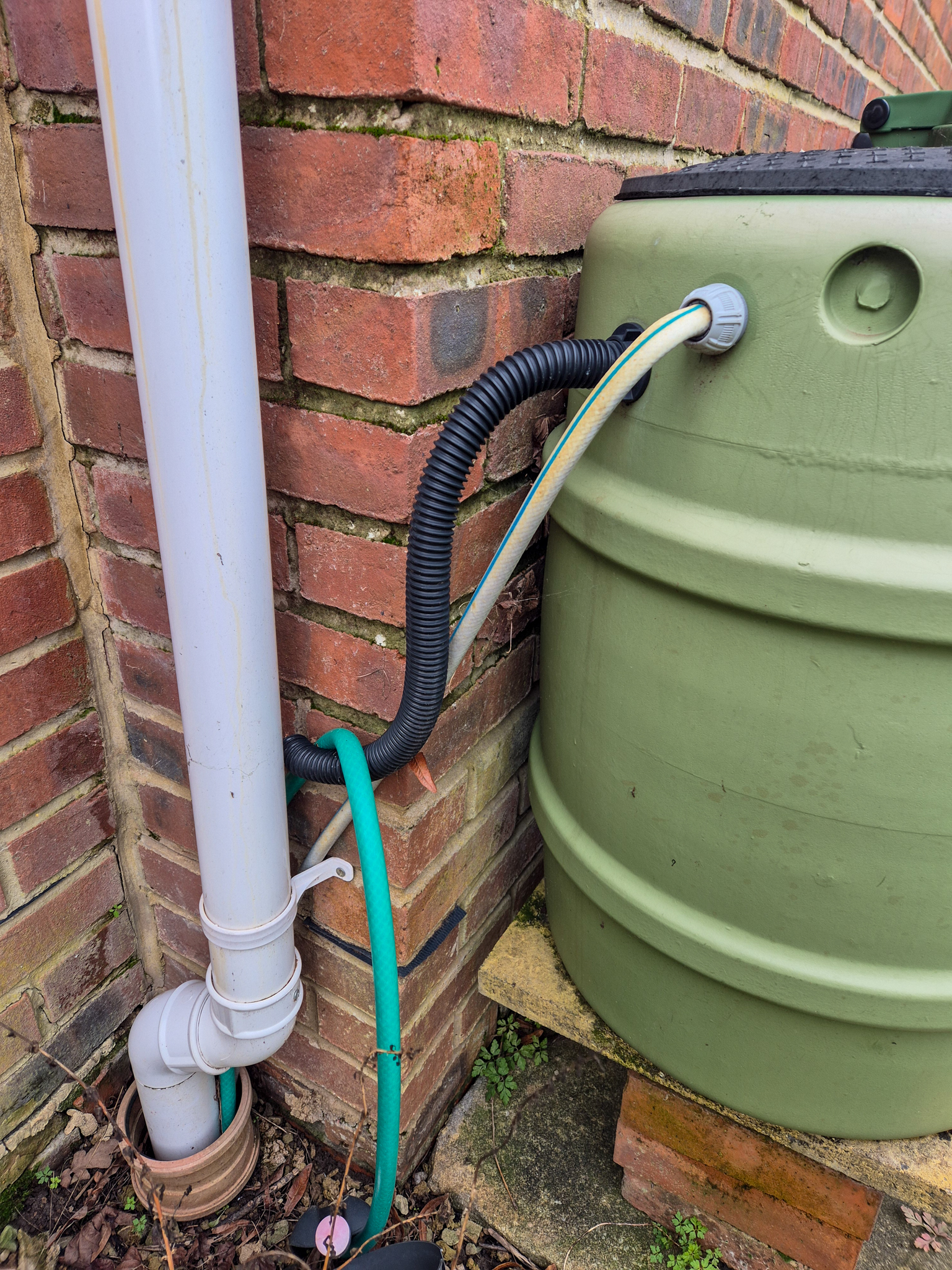
Unlike the humble water butt, which typically holds about 200 litres of rainwater, a rainwater harvesting tank can store anything between 1,500 to 10,000 litres or more.
Most rainwater harvesting tanks are installed below ground. Burying the tank keeps it out of sight, insulates it from freezing and prevents algae growth caused by heat and light. This helps stop the water going green and slimy. Water is then pumped either directly to appliances or to a header tank in the loft. A pump and electricity is needed to move water out of the tank and around the home.
Under Building Regulations, all pipes and fittings carrying harvested rainwater must be clearly labelled as “Not Drinking Water” or “Non-Potable” to prevent contamination of the mains supply. Separate pipes and clear identification should also prevent accidental connection to handbasin or kitchen taps.
Every RHS needs a mains back-up for when there’s no rainwater left in the tank. A float switch sensor detects low water levels and automatically opens the main water feed to top it up. The larger the tank, the less frequently the mains back-up is needed.
What size tank do I need?
Choosing the right size tank can be tricky. For an average one-to-four-member household using rainwater for running clothes washing machines and flushing toilets, a tank between 1,500 to 3,000 litres is a good starting point. Larger tanks (5,000-7,500 litres plus) offer greater capacity for garden watering and future increases in demand. For example, if a family grows from four to six.
Online calculators can help estimate the right tank size based on household size and local rainfall levels. It’s also sensible to speak to suppliers for advice. Key suppliers include Eduramaxx, Graf and Rainwater Harvesting Ltd.
How much water can you harvest?
To work out roughly how much rainfall can be harvested, multiply the average annual rainfall by the building’s roof surface area (width x length). A commonly used formula is:- Roof area (m²) × annual rainfall (mm) × runoff coefficient (0.8) = litres collected per year. The run-off co-efficient accounts for losses, such as evaporation and run-off. Again, there are online calculators available to do the maths.
Rainfall varies across the UK. According to the Met Office, the southeast typically see under 650mm of rainfall annually (below the UK average) while the south-west gets more than 950mm.
For a typical three-bedroom house with a roof area of 70m2, in an area receiving 650mm of rain, the potential annual rain harvest would be: 70m3 x 0.65m x 0.8 = 36.4m3. Convert cubic metres to litres and the potential roof water harvest per year is about 36,400 litres.
In the UK, the average three-bedroom household uses approximately 135,000 litres of water per year. Rainwater harvesting could supply roughly 27% of total demand - a significant contribution. Based on a typical 2025/26 combined water and wastewater charges for Thames Water, this means an annual saving of around £140-£150. With major bill hikes across the UK, potential savings from a RHS are likely to increase in future.
Cost of installing a rainwater harvesting system
Costs vary widely depending on the type of system, size and complexity of installation. Basic water butts holding between 200 and 1,000 litres typically costs between £38 and £350 and are suitable only for outdoor use.
Garden-only pumped systems, such as those supplied by Graf, with tanks ranging from 1,500 to 7,500 litres, generally cost between £2,000 and £3,700. Pumped home-and-garden systems from the same supplier, with similar tank capacities, start at around £2,400 and rise to just over £4,000, excluding installation. More advanced or large-scale domestic systems can cost £5,000 to £10,000 or more.
Running costs are modest but not zero. Pumps require electricity, adding a small weekly cost and slightly reducing the system’s environmental benefit.
Should you invest in a system?
Why waste a free resource? With 2025 now officially the hottest year on record, rainwater harvesting offers a way to ease pressure on mains water supplies and cut household bills. Fully plumbed in home-and-garden systems can cost thousands of pounds, putting them beyond the reach of many households. But simpler solutions still make a difference. Basic water butts offer an affordable and an eco-friendly way to keep gardens green while wasting less treated water.