
Planning for Climate Change
There is no doubt that the world is facing a climate emergency, due in the main to pollution of the atmosphere by the emission of greenhouse gases from human infrastructure. This has brought about government driven initiatives to drastically cut down the emission of carbon dioxide, methane and other gases harmful to our ozone layer.
We are being encouraged to switch from internal combustion engine (ICE) vehicles to electric vehicles (EVs), with many governments banning the sales of new petrol and diesel cars in the next ten to fifteen years, although as sales of EVs fluctuate and car manufacturers reconsider their EV production, this may become a fluctuating target. Regardless of these ambitious targets, moving from fossil fuelled cars to electric ones will see a big reduction in our daily greenhouse gas emissions.
Although personal transport is a major part of our daily energy usage it is not the only way we can make a difference to our carbon footprints. The way in which we manage our domestic environment can have a big impact on our energy usage. We have opportunities to retrofit more energy efficient systems into our existing homes but this can in many cases prove to be an expensive exercise in comparison to designing and building in energy saving features to new build homes.
Successive governments have highlighted an urgent need to build more new, affordable homes and have set ambitious targets for both social and private house builds. This gives both government and local authority planners a clear opportunity to mandate the integration of greener, energy saving technologies into all new build homes as part of the planning process. Not only is adopting greener technologies better for the environment it is less expensive to integrate them into a new build than to retrofit them into an existing property, potentially removing the need for government to incentivise the market with expensive grant schemes.
The fitting of gas boilers is to be banned in new build homes as is replacing like for like in existing properties. There is however, still some dubiety as to what the implementation date will be for that ban with 2025, 2030 and even in some quarters, 2040 being hinted at. It is being suggested that the lack of clarity is due to the perceived cost of replacing a gas boiler with a heat pump, which is the accepted alternative in most cases. Although the initial cost may be higher, the main driver for the switch is to move away from fossil fuels and adopt a cleaner, more renewable alternative.
Retrofitting a heat pump and the other equipment needed, such as a hot water tank is likely to cost between £7,000 and £13,000. When fitting a heating system to a new build home it is much less expensive to fit a heat pump system, which would favour underfloor heating, than retrofitting it. That being the case it would make sense to fit heat pumps to all new build houses from now on rather than wait for the legislation. Some developers may be reticent to incur the extra cost but if the installation of the heat pump were to become one of the conditions of planning approval, they would have no choice.
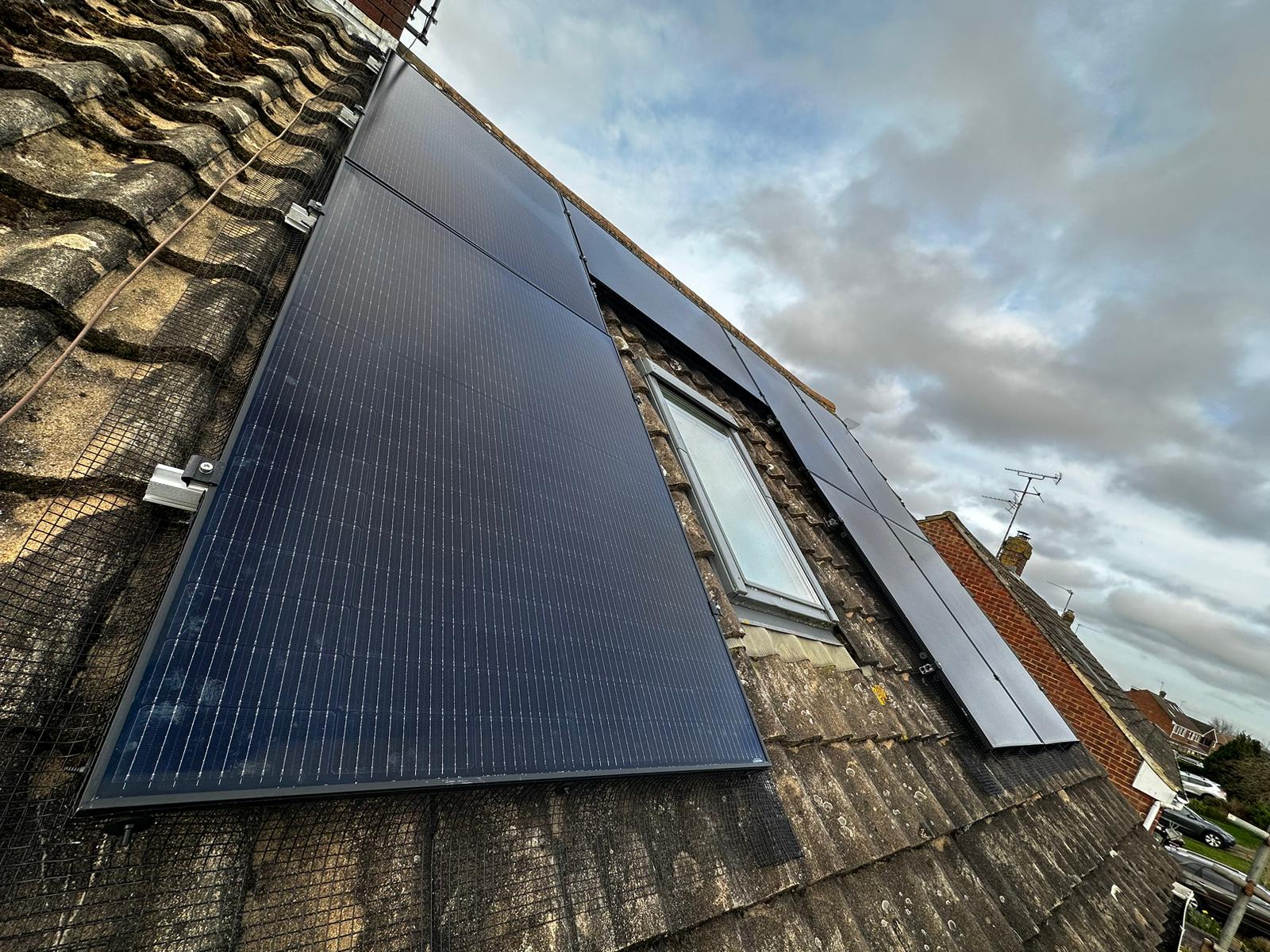
Local planners could also encourage the use of roof mounted solar panels by insisting on the fitting of these as a condition of planning permission being granted. Using solar panels to generate electricity and installing batteries to store the power until it is required in the property would give flexibility of power usage and if the system is configured correctly, could power the property in case of a power outage from the grid. Once again installing solar roof panels at the construction stage is less expensive than fitting panels to an existing traditional slate or tiled roof.
If the ban on internal combustion engine vehicles goes ahead as planned, most of us will at some stage need an EV charge point installed at our homes. This allows us to take advantage of low rate EV tariffs to charge our electric vehicles as well as power our normal domestic usage during the night time hours. Once again, local planning departments can help with the promotion of these to all new houses. A ready fitted EV charge point could also be a useful feature of the property when it is being sold and might even encourage the sales of EVs by lessening the charge anxieties of prospective EV buyers. If we can pre-wire new houses for internet, phone and television we must surely be able to prewire for EV charging.
Street lighting is another area where local authority planners can make a difference to our carbon footprint by requesting solar street lighting rather than traditional mains powered sodium lighting. These may be more expensive to purchase than traditional street lights but are less expensive to install as there is no requirement to connect to the mains electricity supply. Solar power is free, making solar lights less expensive to operate and their LED lights would also incur lower maintenance costs due to their longevity.
We are being told that because of global warming we can expect more extreme weather conditions with perhaps higher temperatures being the norm but also increased rainfall leading to a higher risk of localised flooding. It would therefore make sense for developers and planners to ensure that all new developments have sufficient drainage to cope with heavier rainfall which may be the new norm.
Air source heat pumps appear to be the future of our domestic central heating and hot water systems and solar panels can boost our usage of renewable energy. Both of these can reduce our usage of fossil fuels and help to create a greener economy with less harmful emissions of greenhouse gases such as carbon dioxide and methane and will eventually become part of our lifestyle. Electric motoring will also become the norm in years to come so why not plan for the future and encourage developers to integrate the future into the homes they are building at present by making them a requirement of planning concept now.