
Our First Week With an EV
Having given much consideration to the subject, we had decided that the family car, having been a good and faithful servant to us, was in need of replacement. That decision meant that we were faced with another quandary. Do we take a small step to another petrol engine car or take a giant leap to electric vehicle (EV)? After much deliberation and debate we set off to compare the market in terms of what was available and what would be the cost.
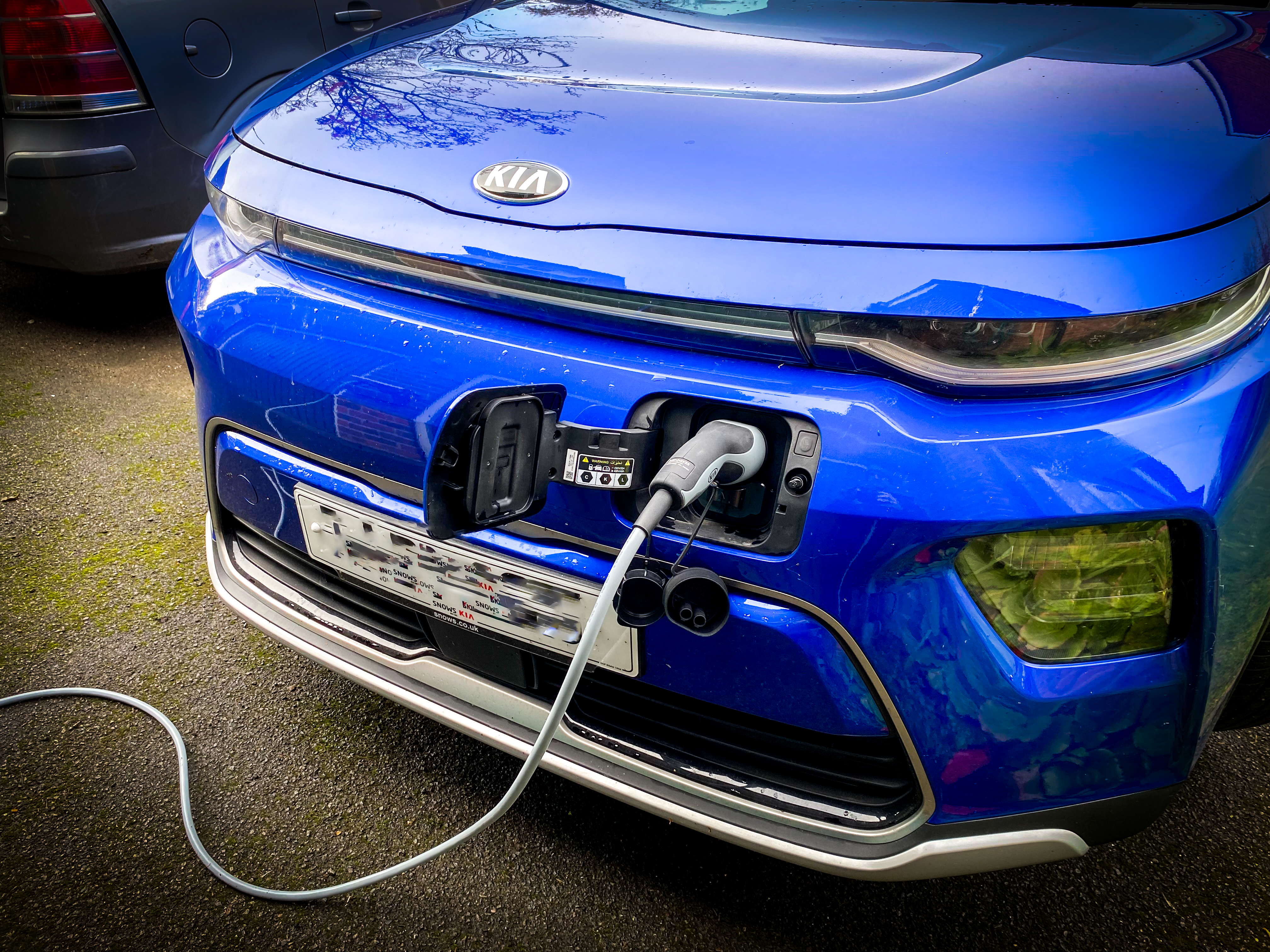
Before we went to look for our next vehicle, we read articles, watched video clips and listened to advice from various sources to try to understand what our best options would be. We understood petrol and diesel cars having owned a variety of these over the years but looking at the market told us that sales of new ones were being phased out by 2035. We felt that this would have an effect on second hand values which we felt was worth taking into consideration.
The introduction in 2019 of the first Ultra Low Emission Zone (ULEZ) in central London and the subsequent spread of these zones with their £12.50 per day charge is the first evidence of fossil fuelled car drivers being penalised for choosing to stay with petrol or diesel cars. Other major towns and cities are now adopting ULEZ and it is likely that soon we will be subjected to a ULEZ charge in every town and city in the country. As the 2035 deadline comes and goes, we were unsure of how local and national government’s attitude to petrol and diesel vehicles might change and what other discouragement they would introduce to encourage the switch to EVs. Road tax for petrol and diesel cars will undoubtedly increase, fuel duty could also see increases as could parking charges for non-EVs.
We also looked at our driving patterns and soon realised that the vast majority of our driving was made up of regular, short journeys of under fifty miles, which fitted the profile best suited for electric motoring. As we have a drive giving us off-street parking, we had no problem in having a home charger installed giving us ready access to a low rate EV tariff and the ability to keep the vehicle battery topped up as and when necessary. Drivers without off-street parking may find a home charger installation more challenging. With all of this in mind we set off in search of the next family car with our thoughts veering towards an electric vehicle, but a petrol engine not being ruled out.
We trawled round various dealerships and eventually set our minds on a specific make and model of car which actually gave us the choice of electing to choose either a petrol version or a fully electric option. The cost of an EV is recognised as being higher than an equivalent petrol vehicle, so instead of eventually buying a two year old petrol version we opted for a three year old electric version.
The first thing of note when we pressed the start button to take the car out for a test drive was the lack of noise. Everything was very quiet with only road noise to be heard. Looking ahead at the dash, everything was digital, no large speedometer, just a highly visible digital readout to show the vehicle speed surrounded by other animated graphics and icons. Looking down, no gear lever, just what can only be described as a drive selector with a similar selection to an automatic gearbox in a conventional vehicle. Park, Neutral, Drive and Reverse, all selected with a short “gear lever” style selector. The car was full on technology and driver assists which will vary from model to model and which has taken some time for us to figure out. To start our test drive it was simply a matter of lightly pressing the accelerator which releases the parking brake and sends the car forward.
At this stage of the test drive it became obvious that an EV is a very quick vehicle with the electric motor delivering an immediate response to the accelerator. The second slightly disconcerting aspect of driving the EV was that there are no gear changes. Even driving an automatic petrol or diesel, you were conscious of the automatic gear box changing up or down, but an EV has no gear box, so no gear changes which felt slightly strange at first.
Other than the lack of engine noise and gear changes, driving an EV is very much like driving a conventional automatic car. Charging your EV’s battery is a different matter altogether. How do I do this and when do I need to charge are two important questions and for a generation which has never done this before, it can prove challenging at first.
Thankfully it is not difficult to charge an EV, but you need to do some preparation in advance. By far the cheapest way to charge your EV is at home with a charge point fitted to the wall of your house and linked to a specific EV tariff. This gives a rate of 7 pence per kilowatt hour (kWh) in our case, as opposed to 24.50 pence per kilowatt hour (kWh). although energy suppliers do vary so best to shop around. This EV rate applies during the hours of 23.30 to 05.30 and not only does it give a good rate for charging your vehicle it powers the rest of your property for that low rate as well.
The installation of our charge point took a few days as the installer came across a problem which he needed the network supplier to resolve and that took two days to arrange and undertake. Once we were ready to put a charge into the vehicle’s battery there was a plethora of advice to be had, from the installer and power provider and the charge point manufacturer. Sadly, most of this “help” information assumes a level of tech-savvy rarely found in more mature people which is where YouTube videos can be more informative. We were asked to download a couple of Apps to our phones and that allows us to manage the charging of the vehicle. Now all we needed to do was to unlock the car, plug the charging cable into the car, set up the charge on the App and when prompted by the App,” Authorise the Charge” by pressing an onscreen button and lock the car again.
EV manufacturers will quote you a “Range” figure for a fully charged battery. This figure tends to be a little on the optimistic side. The manufacturer of our EV quotes a range of 217miles but in reality when fully charged our car shows a range of 178 miles, so be aware of this if range is likely to be an issue for you. We have an animated equivalent of a fuel gauge on the dash which shows in graphic form how much charge we have at any given time, with a digital readout of the number of miles charge we still have.
It was also brought to our attention that there are a diversity of functions and accessories in a car which require electricity to power them. The dashboard display, including the information system, which is a mini computer, the entertainment system and the air-conditioning/heating including possibly, heated seats. The only source of power these have is the same battery which powers the car, so the more you use power for these, the more you shorten the vehicle’s range. Also worth noting is that a cold battery will not store charge the same as a warm one, so in the winter cold weather will also shorten the range of the vehicle.
There are a range of buttons and icons to press but these vary from model to model and very often no real instruction manual unless you download a PDF version which in our case was a 290 page document so best play with the instruments and accessories before you leave home rather than being stuck in a car park wondering how to reverse park using the cameras in the car.
One last lesson we have learned. Pedestrians and cyclists do not hear you drive up behind them and as a result, pedestrians will often step straight out in front of you, particularly if they are in conversation or on their phones.