
Is it time to detox your kitchen of plastic?
Why some utensils could be poisoning you
Slicing mushrooms on a plastic chopping board. Flipping an omelette with a black plastic spatula in a non-stick pan. Grinding black pepper with a plastic mill. Just another Saturday morning fry-up. But what if those everyday kitchen utensils are releasing harmful chemicals into your food? Recent studies suggest the humble tools we trust in our kitchens may be shedding toxic substances from microplastics to “forever chemicals.”
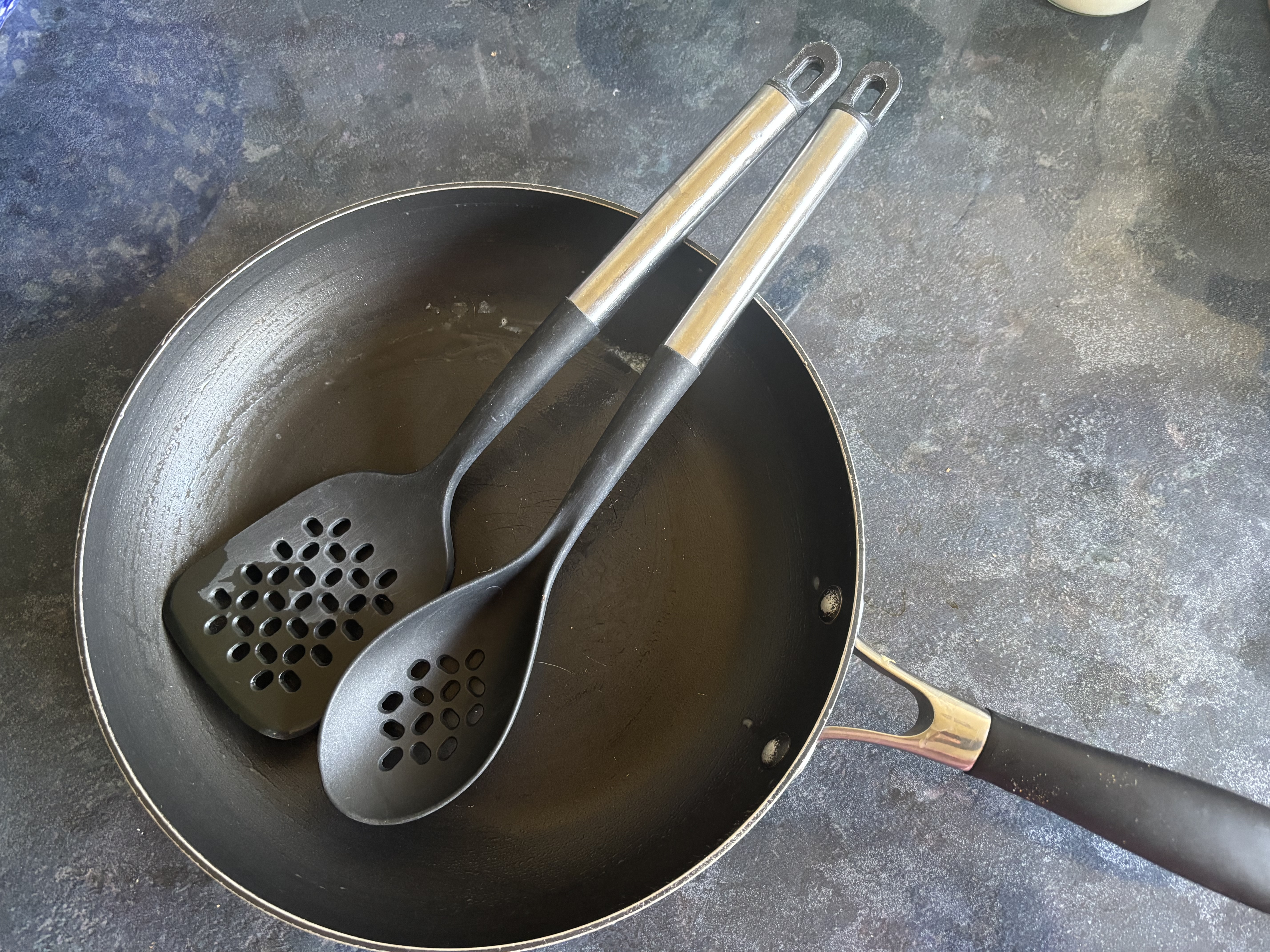
Dangers of black plastic utensils
Black plastic spatulas, spoons, ladles, fish slices – indeed any items made from black plastic – have been in the firing line. Last year a research paper published in the journal Chemosphere declared household items made from black plastic can potentially leach toxic fire retardants into our food. How is this possible?
Black plastics can be made from recycled electronic waste: computers, televisions and coffee machines. While this may sound eco-friendly, these appliances tend to be treated with chemicals to reduce fire risk. And the chemicals, including brominated flame retardants or BFRs and organophosphate flame retardants (OPFRs), can be toxic to humans. Health concerns include problems with the endocrine, reproductive system and cancer.
The research analysed more than 200 black plastic products, including fast food trays, children’s toys and kitchen utensils. The study found toxic flame retardant chemicals in 85 per cent of products with kitchen utensils among those with the highest concentrations. The study led to widespread media coverage and scare headlines.
However, it later emerged authors of the paper had embarrassingly miscalculated by an order of ten. In a correction, they maintain flame retardants “significantly contaminate” the plastic products which have “high exposure potential,” maintaining the overall conclusion of their study remains unchanged.
So, it’s best to avoid using black plastic kitchen items, especially as it’s difficult to tell if they been made from e-waste or new materials. Swap your past-its-best plastic with a solid wooden spatula or a steel version. Additionally, avoid microwaving food in black plastic containers as it’s not yet known if microwaving exacerbates chemical leaching. Instead transfer food to microwave-proof glass or ceramic containers.
Microplastics in the kitchen
It’s not just black plastics that are worrying. Cutting vegetables on a plastic chopping board, for example, can shed microplastics into your food. Microplastics, tiny plastic particles less than five millimetres in size, tend to be invisible to the eye but have been found in body tissues and even in the brain. They have infiltrated our food, water and air.
A study published in journal Nature Medicine suggested that the average human brain may contain as much microplastic as a standard plastic spoon (about seven grams). Scientists discovered the amount of microplastics in the human brain appears to be increasing over time; concentrations rose by about 50 per cent between 2016 and 2024. And microplastics concentrations were also higher in brain tissue samples from people who had been diagnosed with dementia compared to those who did not have the disease.
While a direct cause-and-effect link isn’t proven, the presence of plastic in our bodies raises serious concerns. “I have yet to encounter a single human being who says, ‘there’s a bunch of plastic in my brain and totally cool with that,’” comments study co-author Matthew Campen, a toxicologist at the University of New Mexico in a statement.
The health implications of microplastic ingestion are still under investigation, but concerns include DNA damage and increased inflammation all of which may lead to increased risk of cancer and autoimmune diseases. To reduce exposure, consider using chopping boards and kitchen utensils made of wood or bamboo which are naturally antimicrobial. Choose wooden or stainless-steel spice grinders over plastic ones.
The risks of non-stick cookware
Non-stick pans often contain perfluorinated compounds a group of chemicals known as PFAS. They’re useful for cookware as they repel oil and water, making them ideal for non-stick coatings. But it can take these chemicals thousands of years to break down, hence the “forever” bit. Minnesota recently became the first state in the USA to ban the sale of cookware containing PFAS, citing health concerns. Most modern nonstick pans are considered safe to use so long as manufacturers’ guidelines are followed. This includes avoiding high heat, using low to medium heat and never heating an empty pan. If all that is enough to put you off your fried eggs and bacon, invest in some cast iron and stainless-steel pans – naturally non-stick when seasoned properly.
Say goodbye to plastic containers
Consider upgrading your old spag-bol stained plastic Tupperware. Glass and steel containers are nontoxic and easy to clean. Stainless steel can be used for lunchboxes as its lightweight and shatterproof. Green lifestyle blogger Wendy Graham suggests using glass storage containers to store leftovers. “Glass jars make for great storage in the fridge as you can see what’s inside the jar – helping you reduce food waste at the same time,” she says. Alternatively, Dutch brand Mepal offers Easyclip glass food storage boxes with lids. They can be bought as single containers or as a set of three or more and are suitable for the dishwasher, fridge and freezer. Plus, the lid has a steam vent for use in the microwave. And the glass base is oven safe up to 550C.
Clingfilm & food packaging: a plastic free approach
Some vegetables can last longer when wrapped in plastic. This is due to the oxygen-free environment created. Which is worse for the environment – food waste or plastic? This has been dubbed the “plastic paradox.” According to anti-waste charity Wrap, increasing the shelf life of produce by just one day would save UK shoppers £500m per year by cutting back on food waste.
Veg box deliveries, farm shops and local markets or greengrocers are all ways of ditching plastic packaging while supporting local businesses. Additionally, consider swapping clingfilm for a reusable alternative, such as beeswax wraps. Bring your own containers to buy cheese or meat from a deli to avoid plastic wrapping.
Avoid putting plastic containers in your dish washer as that can cause shedding of microplastics. Find an Ecover refill station to refill your dish washing liquids, laundry liquids and all-purpose cleaners. Use wooden dish brushes and plastic-free washable sponges or dish clothes, for example made from bamboo.
Detoxing your kitchen of plastic won’t happen overnight. Start with simple swaps and over time, these changes will add up to a healthier home and planet.