
How can I cool my home sustainably?
Greener ways to stay comfortable as summers get hotter
Heatwaves are no joke. Temperatures have once again climbed into the mid-30s this summer, making it stifling hot during the day and difficult to sleep at night. With the combined effects of climate change and El Nino, heatwaves are expected to become more severe and frequent.
Nearly all UK homes will overheat by 2050 without “critical action” to stay cool, the Government’s Climate Change committee says. Heat stress isn’t just uncomfortable; it can cause exhaustion, sickness and contribute to thousands of premature deaths each year.
Unsurprisingly, more homeowners are turning to air conditioning. Around 2 billion air conditioning units are already in use worldwide. The International Energy Agency (IEA) predicts this could triple to over 5.5 billion by 2050.
While air conditioning keeps buildings blissfully cool, it heats the planet. According to the IEA, the technology currently accounts for three per cent of global energy-related carbon emissions and consumes around seven per cent of worldwide electricity. As demand grows, these figures will multiply.
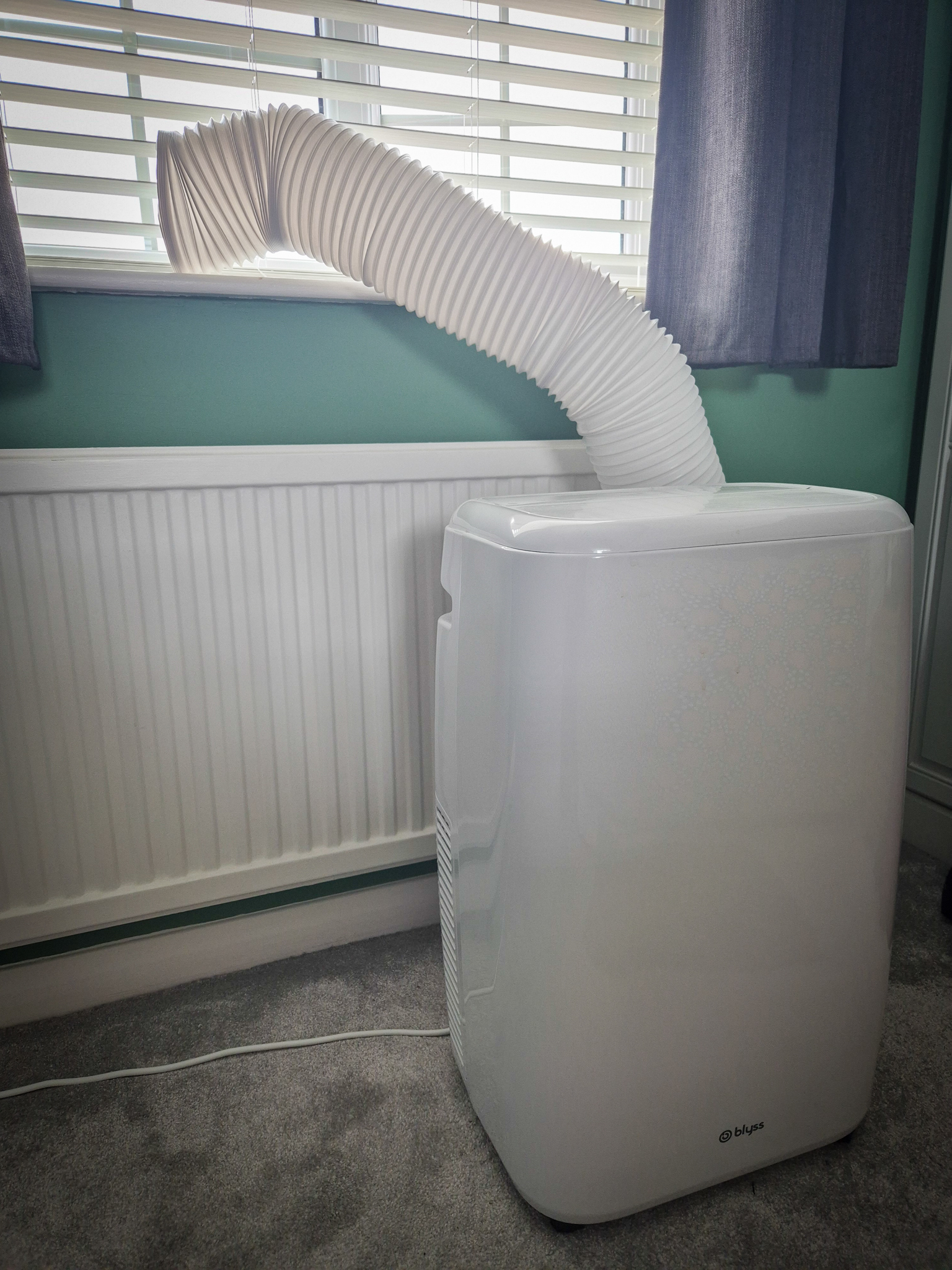
Surely, there must be greener ways to stay cool?
Shade windows and rooflights
British engineer and environmentalist Tom Greenhill created the Heatwave Toolkit after years of improving the performance of buildings in heatwaves. “Air conditioning will cool the privileged but will not work for the many, or the environment,” he explains. His website suggests low-cost ways to stay cool in extreme heat. Window-shading ideas range from closing blinds and curtains to hanging up camouflage netting and rigging up a solar sail. He even suggests painting yoghurt on windows. Yikes! Apparently, it doesn’t smell or attract insects.
“If the sun is beaming through your windows, closing internal blinds and curtains will reduce solar gain,” says Greenhill. While this is easy to do, the sun still hits the glass and heats inside. “To make a significant impact, shade the windows from the outside,” he adds.
Architects agree. “The biggest bang for your buck is to add exterior shading to a building,” says Ruth Madle, co-founder of New York City based firm CO Adaptive. Architects are increasingly borrowing from countries that have lived with intense sunshine for centuries. Deep roof overhangs, recessed windows and screens all helped block the sun long before air conditioning was invented.
External window shading, like wooden shutters or motorised metal shutters, are rare in the UK. But change is afoot. At Maccreanor Lavington’s recent housing development (MacFarlane Place) in west London, for example, each of the 142 affordable flats feature exterior roller blinds. “You put them down when you leave in the morning and when you come back, it’s cooler in your house,” explains Prisca Thiemann, associate director. “It’s simple. And tenants are using them.”
Even traditional fabric awnings, once common outside British shops and houses, are making a comeback. Enviroblinds is a UK manufacturer of contemporary shading products. Their range includes retractable fabric awnings, providing shade to garden patios and large bi-folding or sliding doors.
As rooflights face skywards they catch much more direct sunlight than vertical windows. External blinds designed specifically for roof glazing will reduce solar gain.
Nature can help, too. Deciduous trees are particularly effective because they provide cooling shade during summer while allowing sunlight through bare branches in winter.
Make natural ventilation work harder
Keeping windows and curtains closed during the hottest hours of the day and opening them overnight to let cooler air in can dramatically reduce indoor temperatures.
Greenhill also recommends placing a fan by the open window to drive cooler air inside. Fans use only a fraction of the electricity required by air conditioning.
Ceiling fans are another option. “Particularly good above the bed to help you sleep at night,” says Greenhill.
Opening windows on opposite sides of a property allows fresh air to enter and heat to escape. Architects often design homes to encourage cross ventilation, carefully positioning openings to maximise cooling breezes.
Another effective technique is known as the stack effect. Warm, less dense air naturally rises. Allowing it to escape through high level rooflights or clerestory windows creates a vacuum, pulling cooler air in from lower openings.
Passive cooling has been used for centuries in hotter climates. India’s famous Taj Mahal has chimneys that let hot air out via stack effect ventilation. Wind catcher towers found in historic buildings in Iran and the Middle East catch breezes high above the ground where the air is cooler. Vertical shafts funnel this captured cool air down into the interior of buildings.
The Iranian desert city of Yazd, one of the oldest surviving mudbricks cities, features wind catcher towers and thick earthen walls to keep homes cool.
Designing homes for hot summers
By contrast, the UK’s housing stock wasn’t designed for extreme heat. The trend for glass-roofed kitchen extensions hasn’t helped. But new building work must take climate change into account.
Government has introduced a new building regulation – Document O – tackling overheating, requiring new homes to limit solar gain and remove heat when needed. The regulations don’t apply to home extensions, though overheating is an issue that needs careful consideration. If a kitchen extension looks like a greenhouse; it’s going to feel like one.
Document O prioritises passive strategies to reduce overheating, such as limiting glazing, maximising shade and ensuring effective cross ventilation. Acceptable measures include: “shutters, external blinds, overhangs and awnings.”
Natural building materials with high thermal mass, such as stone and rammed earth, absorb heat and keep rooms cool during the day. More mainstream brick and concrete also soak up excess heat from the sunlight but the carbon emissions involved in their production makes them less sustainable.
Retrofitting homes to make them cooler
Many of the same principles used in new homes can also be applied to existing buildings. A passive cooling retrofit focuses on improving climate resilience.
The priority is usually reducing solar gain. External awnings, shutters and soleil brille can shade south and west-facing-windows to block high summer sun while letting in daylight.
Improving the building fabric can also make a difference. For example, wood fibre insulation, a natural alternative to mineral wool with a higher thermal mass, can help prevent overheating in summer as well as heat loss in winter.
White-painted “cool roofs” are highly effective at reducing the transfer of heat from direct solar radiation to the rooms below. A common sight in Spain and the Greek islands, cool roofs reflect much of the sun’s energy instead of absorbing it.
Hot water pipes running through rooms can release unwanted heat during summer months. Solutions include increased pipe insulation and ventilation where hot water piping is routed.
Retrofit takes a “fabric first” approach. This means focusing on the structure of the building: the walls, roof, floors, windows and doors. The aim is to get the basics right, so homes need less cooling and heating.
Consider starting with a retrofit assessment costing a few hundred pounds. Instead of guessing which measures to take, an assessor can identify key factors that contribute to overheating risk and suggest solutions.
Heat pumps for cooling
But what if aircon itself could be greener? Some low carbon heat pumps are dual purpose. According to ground source heat pump specialist Kensa: “Ground source heat pumps can deliver heating and cooling when set up correctly.”
There are two ways this works. The most energy-efficient option is passive cooling. Instead of using the heat pump’s compressor, the system simply circulates cool fluid. It does this by tapping into the ground’s naturally lower temperature.
It’s low-energy and doesn’t involve pumping hot air outside like conventional air conditioning. But installation requires a large outdoor area of buried pipework or a deep borehole and can cost between £15,000 to £30,000.
Active cooling reverses the heat pump cycle, pulling heat out of the building and returning it to the ground. As Kensa explains: “While ground source heat pumps can offer active cooling, like air conditioning, where they shine is passive cooling.”
Air to air heat pumps also provide cooling – and tend to be significantly cheaper than ground source heat pumps, making them a more affordable option.
The environmental impact of air conditioning depends largely on the energy source. Homes with solar panels can produce much of the electricity needed to run heat pumps and mechanical cooling systems, cutting carbon emissions and running costs.
As the UK’s National Grid continues to replace fossil fuels with greener energy sources like wind, solar and biomass, the carbon footprint of air conditioning will fall.
Air conditioning is set to become a more common feature of British homes. But Greenhill, for one, is emphatic that passive measures “are so powerful, they should be taken first.”