
Climate change causes subsidence to rise
What are the signs and what can you do to prevent it?
Heat waves, flash floods and storms – the UK’s weather is becoming more extreme and it’s having an impact on our homes. Last summer was the hottest on record, according to the Met Office. While record-breaking heat may be bliss for sunseekers, prolonged heat also causes serious structural damage to buildings.
Subsidence happens when the ground beneath a property sinks, causing the foundations to shift and crack. “There was a surge of subsidence cases in 2018 and 2022 (about 24,000 in each of those years) and it’s anticipated there will be a similar number of claims following the hot, dry summer we’ve just experienced in 2025,” says Martin Dobson, founder of Martin Dobson Arboricultural Consultancy, specialists in tree-related subsidence investigations.
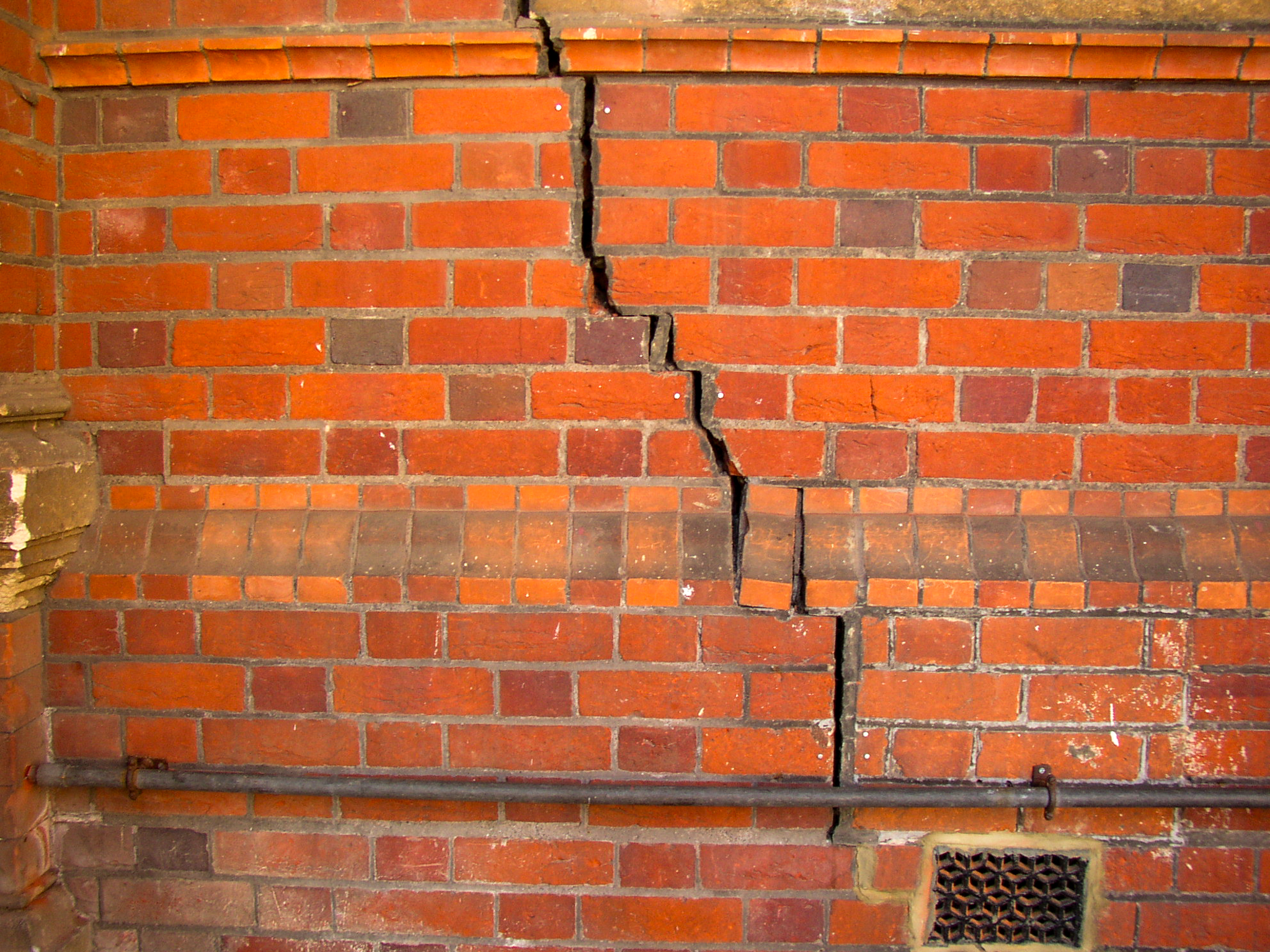
What are the telltale signs?
Most subsidence issues come to light during a property survey, but there are early warning signs. Structural engineer David Stott, tech director at AWA Consulting Structural and Civil Engineers, says: “Diagonal cracking in brickwork or blockwork emanating from the corner of a window or door can indicate rotation in the plane of the wall which can be associated with subsidence.”
Not all cracks in plasterwork and wallpaper are serious though, Stott explains: “Cracks can be due to shrinkage of blockwork as it dries out.” Asked how wide a crack needs to be to suggest subsidence, he adds: “Crack width is not connected to subsidence, although diagonal cracking due to subsidence often increases in width as the height of the wall increases.” Other potential red flags include doors and windows that stick, cracks visible on external brickwork or uneven floors.
Why older homes are more at risk
Subsidence is most common in homes built on shallow foundations where changes in soil moisture causes movement. The risk is greatest in areas of shrinkable clay.
Victorian and Edwardian homes often have shallower foundations, but not all are vulnerable. “Older houses with shallower foundations can sometimes be more tolerant to movement because traditional mortar is weaker. This allows the masonry to accommodate small amounts of movement in the foundations,” explains Stott.
Extensions and conservatories with foundations at different depths can settle differently, but Stott says this “should not be confused with subsidence.”
Why soil type matters
The soil beneath your home plays a major role in its risk level. Clay-rich soils are especially vulnerable to shrinkage because they hold a lot of water. During hot, dry spells, moisture is drawn out of clay, especially by nearby trees and shrubs, causing the ground to contract. When it rains, the clay swells – leading to seasonal movement and cracking. London, the south-east and parts of the Midlands have some of the most shrinkable clays in the UK.
Sandy and silty soils don’t shrink or swell much so there is a “negligible risk” of shrinkage, says Dobson. That said, poor drainage or leaking pipes can wash fine sand away from beneath foundations, creating instability over time. Chalk is generally stable and drains well, while peat-rich soils may shrink as organic matter decomposes.
Gravel and stony soils are typically well draining and stable. If you’re unsure what lies beneath your home, a local structural engineer can identify your soil type.
What are the main causes?
“Clay shrinkage subsidence caused by trees and shrubs is by far the most common cause,” says Dobson. Other causes include steeply sloped ground, leaking drains and even traffic vibration, for example near main roads.
The “big seven” tree species with the highest water demand are willow, poplar, elm, oak, horse chestnut, plane and ash. Their roots can spread several times the width of the tree’s crown. Shrubs and climbers like wisteria can also cause damage if planted too close.
“Usually, the closer the tree or shrub is to the building, the greater the possibility of subsidence. About 70 per cent of cases are closer to a building than 10 metres. Damage can occur at distances of more than 10m but is relatively rare,” says Dobson.
The Association of British Insurers suggests approximate safe distances for mature trees: 40m for willow; 35m for poplar, 30m for elm, 23m for horse chestnut and 20m for beech. Smaller trees like magnolia can be planted about 5m away. But, as Dobson notes: “Various distances are quoted but the ‘safe’ distance for each species would probably preclude trees from most of our towns and cities. I would recommend a distance of 10 metres for all species is reasonably safe and indeed some trees can be planted closer than this.”
What should you do if you suspect subsidence?
Check your home insurance covers subsidence and contact your insurer – most will arrange an investigation. Alternatively, you can hire a subsidence specialist or structural engineer directly. They will assess the damage, test the soil and drains, note the position of nearby trees and monitor cracks over time to confirm what’s happening.
If you’re concerned about trees close to your home, Dobson advises: “In most cases, there is nothing to worry about but there may be instances where a tree is within a few metres to a house and there is a known, shrinkable soil.
“If the tree and building have co-existed for many years and the tree is mature, there should be no unreasonable risk.” If a tree is growing rapidly, he adds, it might be worth pruning under guidance of an arboriculturist.
Fixing and preventing damage
Prevention is always best. Plant new trees and shrubs at a safe distance from your home and avoid species with high water demand, such as willow. Good drainage will also help keep soil moisture levels stable.
If subsidence has already occurred, underpinning may be needed to strengthen or deepen a home’s foundations. It’s a costly but effective fix, often involving excavating under the building and filling the space with concrete.
If a tree is causing subsidence, felling may be recommended. However, removing a tree may cause heave in clay-heavy soil. When tree roots, that previously absorbed large amounts of water, are removed the soil can rehydrate and swell upwards.
However, Dobson says heave is a “very remote risk and shouldn’t really feature as a worry when people are considering tree felling.” He adds: “If a tree is demonstrably the cause of subsidence, then removing it is the cheapest and surest way of preventing the subsidence damage from continuing. Pruning is not consistently reliable.
“Of course, trees should be retained where possible because of the benefits they provide, but it is not always possible to do so.” Other solutions include ground stabilisation, drainage repairs and jacking up the building to its original position.
Can you prevent it?
Tree root barriers, such as those made by Optra, are one modern solution. These copper mesh and felt barriers allow water through but redirect roots away from the property. They’re expensive (£20,000-£30,000) but still cheaper than underpinning which can reach £50,000-plus. Dobson says: “A root barrier is an option but it’s not cheap because often a trench needs to be dug for the installation which might be 3-4 metres deep and fairly long. Sometimes there is insufficient space to install one.”
Before pruning or chopping down a tree, always check if it’s protected by a Tree Preservation Order (TPO) or conservation area restrictions. Even if a tree is on your land, you may need council permission. Fines can apply for unapproved work.
As climate change brings hotter, drier summers, subsidence is becoming more common. By understanding your soil type, managing nearby trees responsibly and seeking expert advice early on you can help keep your home on solid ground.
With thanks to David Stott, technical director at AWA Structural and Civil Engineers and Martin Dobson, for their expert insights.