
Case Study: running a home and two electric cars on solar power
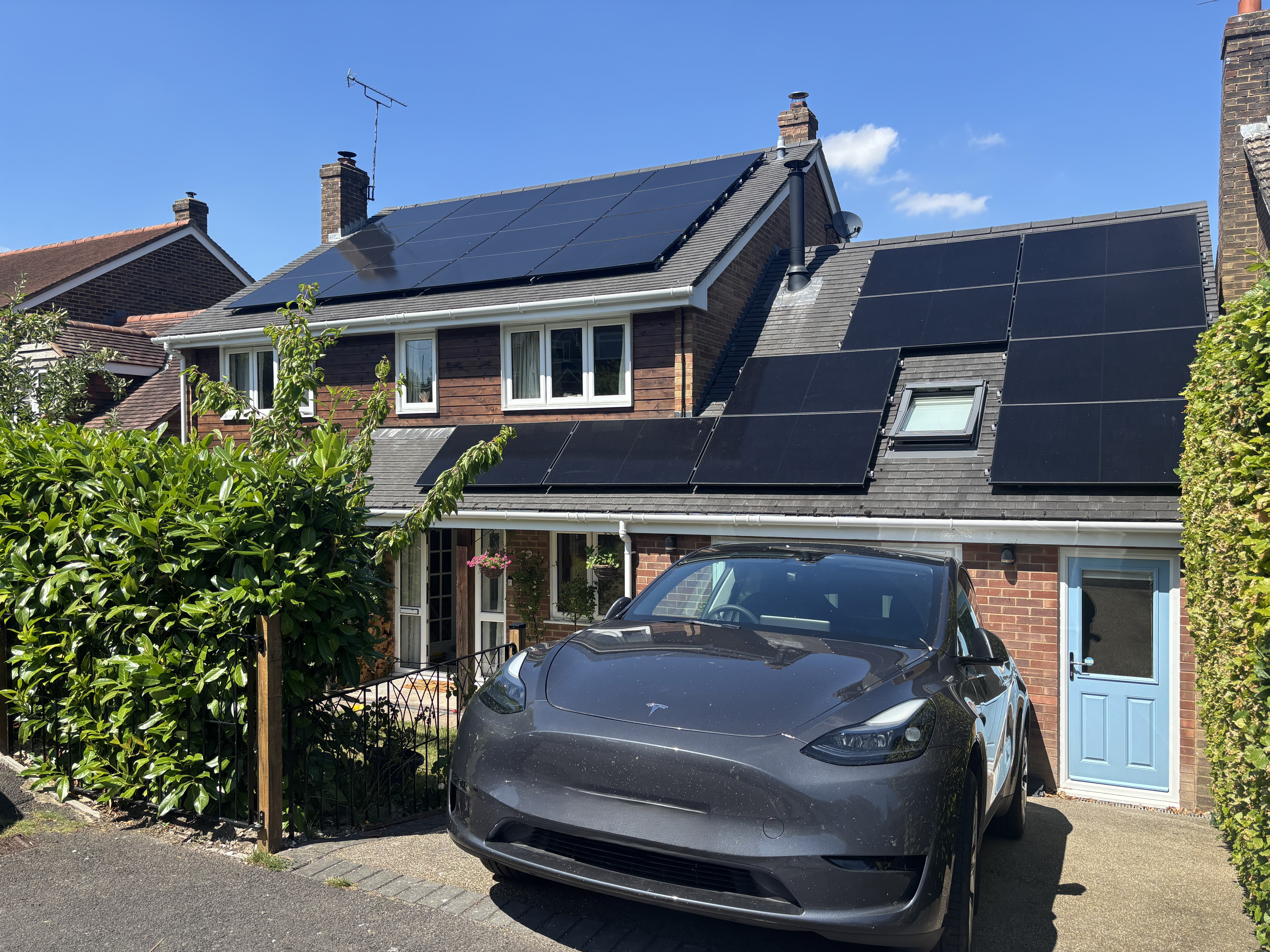
Martin and his family live in a four-bedroom, detached house in a village near Winchester. Both he and his wife drive electric cars. In January 2025, the couple decided to transform their home into a near self-sufficient energy hub by installing solar panels, battery storage and a heat pump.
Martin, a company director, says: “We wanted to do our bit for the environment and be able to charge our electric cars for less.” They had a mixture of motives: saving money, reducing emissions and striving for energy independence. The upfront cost was high, but Martin says: “Now it’s done, we are looking to not rely on the grid – until winter maybe – and having the ability to store electricity means we should be less susceptible to power outages.”
From oil to greener, cheaper electricity
Their village is off the national gas grid, so their extended 1960s house originally had oil heating– a solution that was far from perfect. Martin explains: “Using oil, which as well as being a fossil fuel, caused issues, such as getting oil deliveries in the back garden and it also smelled near the tank. We like our house warm, so we had to fill our tank at least twice, sometimes three times in winter.”
Switching from an oil boiler (which needed replacing) to an air-source heat pump worked well with a solar plus battery system. While heat pumps are energy-efficient, they run on electricity - which often costs more per unit than gas or oil – and can lead to higher energy bills. Installing solar panels with battery storage meant Matin could generate his own electricity to help run a heat pump, reducing reliance on the National Grid.
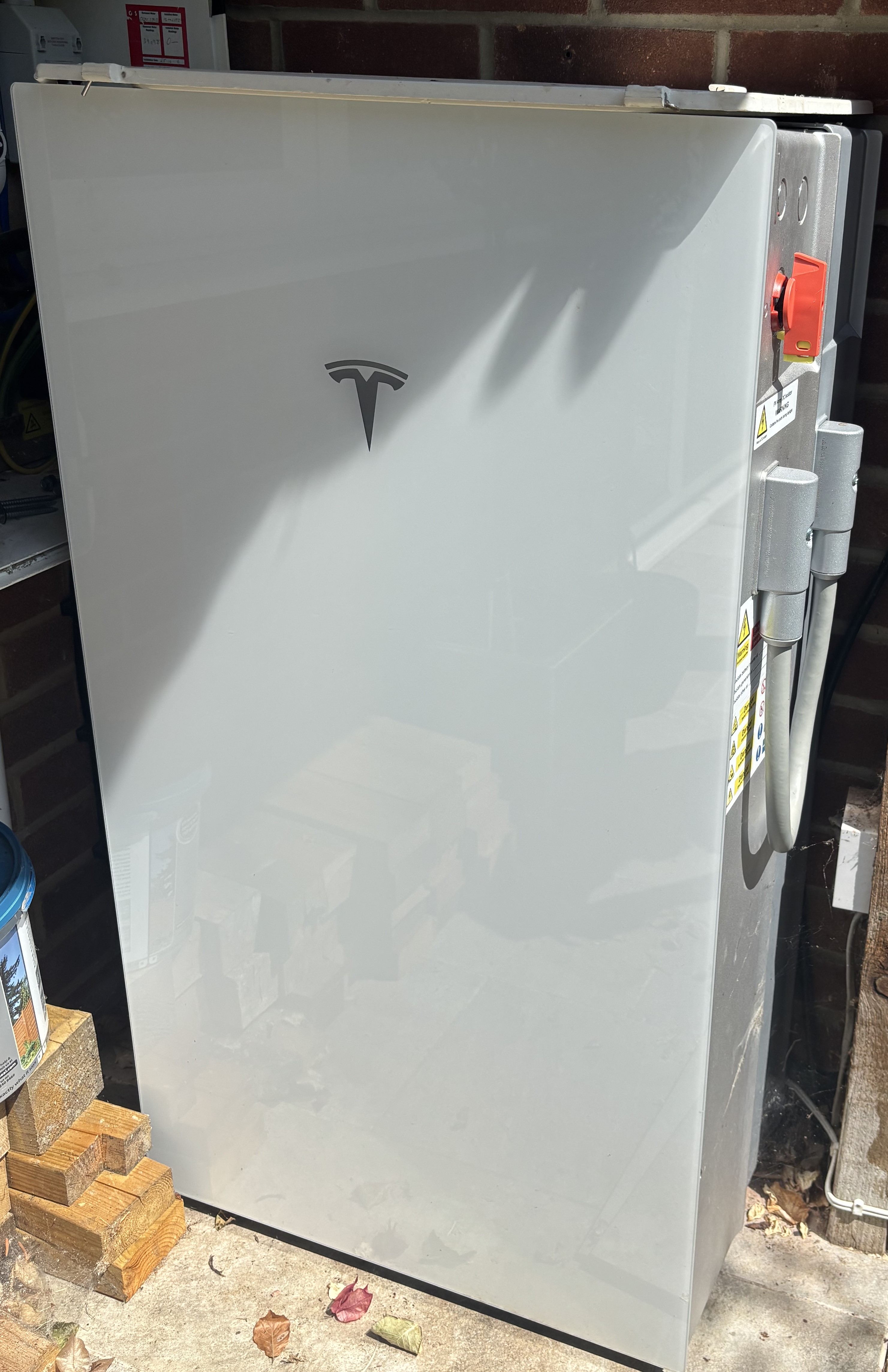
Martin’s system with 26 Aiko Neostar 2S solar panels providing 11.8kW of capacity, paired with two Tesla Powerwall 3 batteries (each offering 13.5kWh), delivers impressive performance. “If we get about three hours of strong sunshine, the batteries are fully charged and we can run for 24 hours, depending on whether we charge our cars and how much we use the oven, kettle and washing machine,” says Martin. His wife, a keen potter, even powers a small electric kiln with the solar panels.
Although the family is not yet selling energy back to the grid, Martin has recently moved to a supplier that will pay for surplus electricity. He plans to do so only once the batteries and both electric cars are fully charged. “Selling back wasn’t the main reason to get solar power and batteries, but it could be a nice side benefit on sunny days,” he adds.
Installing and certification
The installation – panels, battery and heat pump – was completed in about a week after scaffolding was erected. Martin received four quotes, prioritising local companies. He chose Romsey-based Cinergi for their expert advice and because they offered a complete package, handling the solar, battery, and air-source heat pump installation. Each element was MCS-certified. “It was good to have everything handled by one company. We then felt confident it would all work together,” he adds.
Performance so far
Annual solar production is estimated at 11,000 kWh with Martin reporting an average of 25 kWh generated per day so far. His panels are all south-facing, split between the main roof and an extension. Initially, only one battery was installed, but the energy wouldn’t last overnight. So, Martin added a second Powerwall. “It made a huge difference. With both batteries in place, we can now be 100% off-grid in sunny weather,” he says.
“We prioritise the house, then the batteries, and then any extra we put into the cars if they need it.” Charging is mostly managed manually, with Martin using smartphone apps to track generation and storage in real time. “If I see there’s excess solar, I plug in a car.” Both partners work from home. “We don’t drive a lot of miles each day, so the cars only need topping up once a week,” says Martin.
Costs and payback
The total cost included £90 per panel, about £8,000 for the first Tesla Powerwall (with the second being cheaper due to not requiring an inverter) and roughly £4,000 for heat pump and panel installation, including scaffolding. The family got £7,500 off the installation cost of a heat pump with the Boiler Upgrade Scheme but didn’t qualify for grants for solar panels. Though the payback period is estimated at 7–8 years, Martin emphasises that this wasn’t the main motivation.
“We no longer pay for oil (around £1,400 a year) or petrol (saving £100 a month) and our electricity costs are basically nothing right now (June). Previously, before the heat pump and an additional electric car, we were paying over £200 a month.” The immediate environmental benefit of not consuming fossil fuels should also be considered, adds Martin.
Winter outlook and upkeep
Asked if there is a big difference in solar power generated in summer compared to winter, he says: “We have only just installed the second battery, so hard to tell, but in summer the system is fantastic. If there is not enough solar charge next winter, we will take on a tariff that allows us to charge the battery, using cheaper electricity overnight.”
What kind of maintenance is required? “So far, nothing really. I imagine the panels will need a clean eventually, but that’s about it.” Installer support has been prompt and helpful.
Carbon footprint and lifestyle shifts
The family’s carbon footprint has fallen sharply. Though Martin hasn’t calculated the exact figure, removing oil heating and two petrol cars from the equation is clearly significant.
Martin says: “We’re just one household, and global emissions are a much larger issue, but every bit helps.” Since the system was installed, the household has changed their energy usage habits. “We charge the cars and run the clothes washing machine when the sun is out!”
After a decade in the house, Martin’s only regret is timing. If he could go back and do anything differently, he would have installed the greener, cheaper electricity tech sooner. “But at the time we didn’t have the funds and solar panels have come down significantly in price.”
Would he recommend the setup to others? “Absolutely. Having as many panels as possible and enough battery capacity to store excess is key. Right now, in the sunnier months, we are completely off-grid and self-sufficient and that was the aim.
“It’s a great feeling knowing we’re running our home and cars mostly on our own solar-generated energy.”